Our Online Class has been voted the best Texas License to Carry for Military Members
Do you have to be a Texas Resident to get a Texas LTC?
No. Texas will issue a Texas LTC (license to carry) to anyone 18 years old or older, who has a valid drivers license, or State ID issued by any one of the 50 States. It’s very easy to get a license to carry in Texas.
I have had Active Military Members stationed from Fort Bragg, Elmendorf AFB, 29 Palms, and Naval Station Norfolk to Veterans now living in Killeen Texas to Wasilla Alaska. No matter your duty station, or home residence. The Texas LTC is for you.
I put this together to cut through the red tape with a lot of articles. Here are the numbers broke down for
Texas License to Carry for Military Service Members
If you are Active Military here is how the Texas License to Carry – Texas Concealed Carry works:
- You must complete an online or in-person class (Ours is Online and $40)
- You will have to submit documentation you are Active Duty, and latest range card
- Range is waived (Have to show you did a range qualification within last 10 years rifle or handgun)
- Texas has a $0 License fee for Active Military
- So, costs for Active Military
- License Fee: $0
- Our Online Class $40
- Fingerprint Fee through DPS Indigo $10
Total Cost for Active Military $50 plus the cost of gas to do Fingerprints.
If you are a Veteran here is how the Texas License to Carry – Texas Concealed Carry works:
- You must complete an online or in-person class (Ours is Online and $40)
- You will have to submit documentation you are Veteran, and latest range card within 10 years.
- Range is waived if did a range qualification within the last 10 years rifle or handgun.
- Texas has a $25 License fee for Veterans.
- So, costs for Veterans (Honorably Discharged)
- License Fee: $25
- Our Online Class $40
- Fingerprint Fee through DPS Indigo $10
- If you don’t have a range Qual. Within last 10 years of applying you will have to find a local range to do familiarization (most ranges, do it on the weekend, takes about an hour, all students I have talked has said range cost between $10-$25, depends on range)
Total Cost for Veterans $75 plus the cost of gas to do Fingerprints. If range is waived.
Proudly Serving Active Duty Military and Veterans in Texas and Nationwide
If you’re an active-duty military member, veteran or family member looking to get a Texas license to carry, take our online LTC class for only $40. It’s the most affordable and convenient way of getting your license and allows you to carry across more states than any other license in the United States. Plus, you can renew your Texas LTC online from anywhere in the world every five years. So, get your Texas license to carry today!
The Texas license to carry online class makes it easy for veterans to conceal carry their weapons legally in and across 37 states in the U.S. The best part is you don’t have to be a Texas legal resident to get your Texas carry permit! With our Texas LTC class, you can feel confident that you are carrying your weapon lawfully and know that you’re covered by State law no matter where you go.
Texas online concealed carry class.
Are you a U.S. military veteran who wants to get a Texas License to Carry? If so, you’re in luck! LTC Training Texas offers an exceptional online course with unique benefits for veterans. In addition, the course is approved by the Texas Department of Public Safety (DPS) and meets all the requirements for getting your carry permit.
As a veteran myself, I know how important it is to carry your weapon with you, no matter where you go. That’s why I’m proud to offer this course to veterans. With a Texas LTC, you can feel confident that you are carrying your weapon lawfully and know that you’re legally protected no matter where your travels take you.
Even if deployed across seas, you can still take the course! Our Texas Concealed Carry class is compatible with all devices, including smartphones, so all you need is an internet connection, and you can log in and complete the course at your own pace!
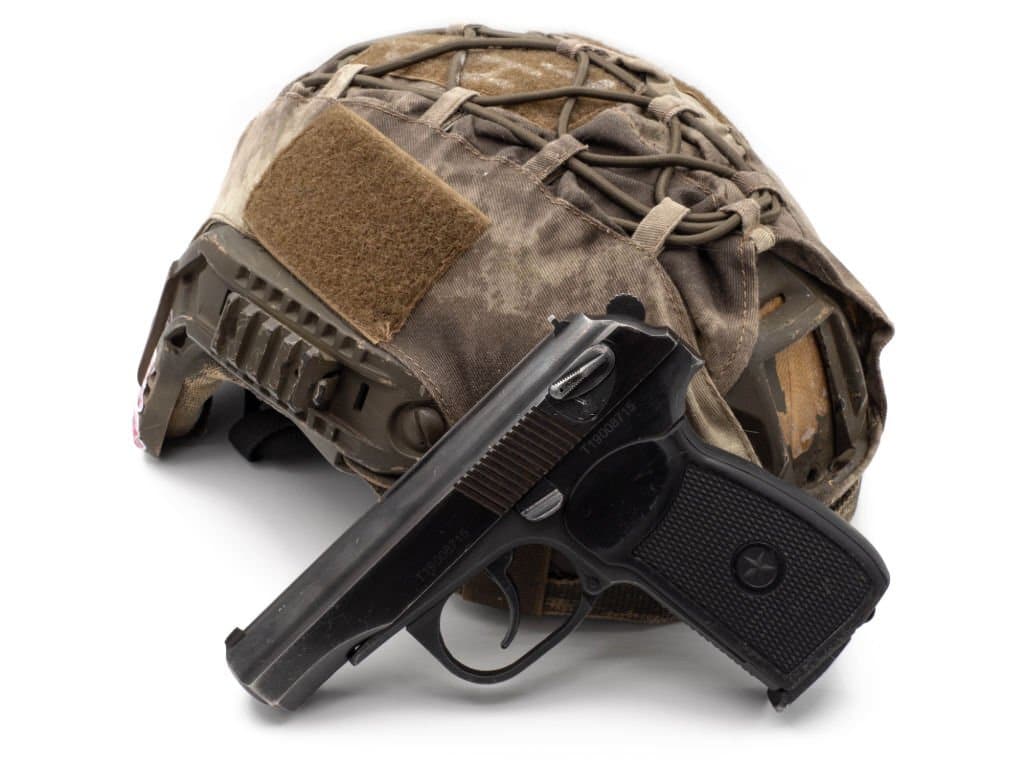
Special for military members.
The Texas LTC course is the best option for retired and active military members for several reasons. We’ll list the most unique and beneficial below, so keep reading!
- You can get the license without firearms training if you have a range card, range scores OR proof of firearms familiarization training (rifle or handgun) from the military dated within the past ten years.
- Active-duty military, veterans and families can all get Texas licenses to carry with our Texas LTC class for only $40.
- The state license fee (paid to the Department of Public Safety) is $0 for active-duty military and $25 for veterans, separate from the $40 class charge.
- Whether you move or transfer, you can always renew your Texas LTC online every five years.
- The Texas LTC allows you to carry across more states than any other license in the United States.
Accepted Supporting Documents.
Active Texas Military Members.
Must provide current proof of service. Provide a copy of your LTC-100/LTC-101, military range scores from within the past ten years of your LTC application, which you can use in place of the proficiency portion of the LTC-100/ LTC-101 (GC § 411.1881).
Active Military
We require a current copy of your military identification and leave earnings statement. If you don’t have a leave earnings statement, we also accept current orders and pay stubs or a letter from your commanding officer. Or you may provide your DD-214 showing honorable discharge and date (if the application is within 365 days of discharge). In addition, submit a copy of your LTC-100/LTC-101, military range scores from within the preceding ten years of your LTC application, which you can use in place of the proficiency portion of the LTC-100/LTC-101 (GC § 411.1881).
Veteran/Retired Military
Provide a copy of your DD-214 stating your character of service as honorable or any other official documentation showing that the applicant was honorably discharged or is retired military. Military range scores from within the past ten years of your LTC application, which you can use in place of the proficiency portion of the LTC-100/ LTC-101 (GC § 411.1881).
LTC Training Texas supports busy lifestyles.
All the mentioned benefits to active and retired military members are great, but what does it matter if the course doesn’t fit comfortably into your lifestyle?
Here at LTC Training Texas, we know how busy Americans are today; that’s why we’ve designed our program to be convenient, quick, and easy.

You can complete our Texas Concealed Carry class online from anywhere in the world and at any time that is convenient for you. All you need is a computer or any mobile device with internet access.
The most convenient LTC class.
Only requires a device and stable internet.
LTC Training Texas offers a convenient way for veterans to obtain their carry permits under Texas law. The course only requires a device and a stable internet connection, making it easy for veterans to complete from anywhere.
Additionally, our course is taught by our Texas-qualified LTC instructor, who is passionate about helping veterans get their carry permits. With LTC Training Texas, veterans can be confident they get the best possible education while obtaining their LTC.
Available to you 24/7.
The LTC Training Texas online class is available to you 24/7, so you can complete the training at any convenient time. Accessible and easy to follow, you get the most out of our course.
Complete anywhere
The LTC Training Texas online concealed carry course is perfect for veterans who want to obtain their carry permit but are confined to one spot. You can complete the course from anywhere, and it provides all the classroom training necessary to get your carry license.
Our Texas License to Carry Online Class is quick and easy!
Only 4 hours total in length.
The Texas LTC course offered by LTC Training Texas is perfect for military personnel. It is quick and self-paced, only taking 4 hours total in length, making it the perfect choice for busy veterans who want to get their concealed carry license as quickly as possible.
Each session is 15-20 minutes in length.
Does 4 hours still sound too long? No worries! Our course breaks into 15-20 minutes sessions, so it doesn’t have to be completed all at once. We pride ourselves on making education accessible and convenient for everyone. Many of our students are veterans who appreciate our course’s flexibility and convenience.
Saves automatically after each session.
Concerned you’ll lose all your progress? Don’t be! Our Texas license to carry online class saves each session automatically after completion. So, you can start whenever and wherever without worrying if you’ll have to start over.
Get protection from a Texas LTC today!
Obtaining a Texas LTC is a breeze for retired and active military members. With LTC Training Texas, all you need is a device with internet access to complete the course online. In addition, the program is available 24/7, making it easy for veterans to find time to complete the training.
Take our online LTC class for just $40 if you’re an active-duty military member, veteran, or family member wanting to obtain a Texas license to carry. It’s the most convenient and affordable method to get your license, and it allows you to carry in more states than any other license in the United States. Plus, you may renew your Texas LTC from anywhere every five years! The Texas license to carry online class allows veterans to legally conceal carry their weapons in 37 states across the United States, regardless of where they reside.
Click below to get started!
When you’re ready to get your Texas License to Carry (LTC), make sure you choose a premier training provider. Conceal Carry Academy and LTC Training Texas are committed to offering the best firearms training possible. When they need information on firearms safety or they want to take a Texas LTC class, gun owners trust the expertise of the pros from Conceal Carry Academy. If you have questions about any aspect of gun ownership in Texas, contact us today!