Texas LTC Course of Fire (2026): Weapons Qualification Steps, Distances & Scoring
The Texas LTC course of fire (weapons qualification) is the live-fire proficiency test required to complete your License to Carry. This guide breaks down the steps, distances, round counts, and scoring—plus practical tips to help you show up confident and pass safely.
Related: basic handgun safety rules • best guns for concealed carry • marksmanship for self-defense
Official sources: Texas DPS Handgun Licensing • Texas Statutes (Official)
Quick Answer: What Is the Texas LTC Course of Fire?
The Texas LTC course of fire (weapons qualification) is the required live-fire shooting test that demonstrates basic handgun proficiency. You’ll shoot a set number of rounds at specific distances and must score a minimum passing score to qualify.
Pass/Fail (High-Level)
- You must meet the minimum passing score on the qualification target.
- Safety is non-negotiable: unsafe gun handling can end the test immediately.
- Accuracy beats speed: focus on smooth trigger control and safe handling.
Tip: If you can consistently keep your shots in the scoring zones at typical qualification distances, you’re in good shape.
What to Bring to the LTC Shooting Qualification
- Handgun (reliable, safe, and familiar to you)
- At least 2 magazines (recommended) or speed loaders if using a revolver
- Ammo (bring extra; don’t show up with exactly the minimum)
- Eye and ear protection
- Closed-toe shoes and range-appropriate clothing
- Government-issued ID (and any paperwork your instructor requires)
What Not to Do
- Don’t bring a brand-new gun you’ve never shot—test it first.
- Don’t bring questionable ammo (misfires and jams add stress).
- Don’t rush: smooth and safe beats fast and sloppy.
Safety foundation: basic handgun safety rules
Start your class here: Texas online LTC course
Texas LTC Course of Fire (2026): 50 Rounds on a B-27 Target (Distances + Scoring)
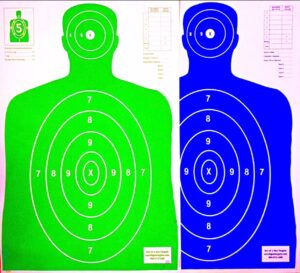
The Texas LTC range qualification is a basic proficiency demonstration. You’ll fire 50 rounds at a B-27 silhouette target from three distances: 3 yards, 7 yards, and 15 yards. You must score at least 175 out of 250 points (70%) to pass.
B-27 target note: It’s a standard human-silhouette target (about 45" x 24"), so you’re aiming for center-mass scoring zones—not a tiny bullseye.
Quick Facts (Save This)
- Total rounds: 50
- Target: B-27 silhouette (human-shaped)
- Distances: 3 yards (20 rounds), 7 yards (20 rounds), 15 yards (10 rounds)
- Passing score: 175/250 points (70%)
- Start position: “ready” / low-ready position (no holster draw required)
- Handgun: revolver or semi-auto
Before You Shoot (What Instructors Usually Check)
- Eye/ear protection on
- Safe gun handling (muzzle discipline + trigger finger discipline)
- Understanding range commands (“cease fire,” “load,” “unload,” etc.)
- Safe loading/unloading procedure
If you want a refresher, review: basic handgun safety rules.
Stage 1: 3 Yards (20 Rounds)
Distance: 3 yards • Rounds: 20 • Start: low-ready
- This stage is about safe handling and basic accuracy at close range.
- Focus on a firm grip and a smooth trigger press.
- Don’t rush—most close-range misses come from poor trigger control.
Stage 2: 7 Yards (20 Rounds)
Distance: 7 yards • Rounds: 20 • Start: low-ready
- This stage tests consistency and recoil control.
- Reset your sights between shots and press the trigger straight back.
- If you need to reload, keep your finger indexed and muzzle controlled.
Stage 3: 15 Yards (10 Rounds)
Distance: 15 yards • Rounds: 10 • Start: low-ready
- This stage rewards fundamentals: sight alignment and trigger control.
- Take your time—accuracy matters more than speed.
- Follow instructor commands carefully and keep the muzzle downrange.
Scoring: How the 175/250 Passing Score Works
The B-27 target has scoring zones. Your instructor will score your target after the course of fire. To pass, you need at least 175 points out of 250 (70%).
Practical tip: If you can keep your shots consistently in the main scoring zones at 3, 7, and 15 yards, you’re in good shape.
How Long Does the LTC Shooting Qualification Take?
Plan for roughly 1–2 hours for the shooting proficiency demonstration, depending on the range, class size, and how the instructor runs the line.
Are There Exemptions?
Some applicants may qualify for a proficiency demonstration waiver under certain conditions. If you think you qualify, confirm directly with your instructor and review the latest Texas DPS guidance.
Official hub: Texas DPS Handgun Licensing
How to Pass the Texas LTC Shooting Qualification (Practical Tips)
The Texas LTC course of fire is designed as a basic proficiency check—not an advanced skills test. If you show up with safe gun handling, a reliable firearm, and solid fundamentals at 3, 7, and 15 yards, most people pass without drama.
The 3 Things That Matter Most
- Grip: firm, consistent, and high on the backstrap (control recoil).
- Sights / dot: confirm what you need to see before pressing the trigger.
- Trigger press: smooth straight-back press (don’t “slap” or jerk it).
Simple Practice Plan (Short + Effective)
If you can do these three drills safely, you’re preparing the right way for the LTC qualification.
1) 3-Yard “Clean Press” Drill
- Fire slow, deliberate shots and focus on a perfect trigger press.
- Goal: tight group in the center-mass scoring area.
2) 7-Yard “Reset and Reacquire” Drill
- Fire controlled pairs (two shots) while keeping your grip consistent.
- Goal: sights return naturally; you don’t have to “hunt” for them.
3) 15-Yard “Slow is Smooth” Drill
- Fire slower, confirm your sights, and press clean.
- Goal: consistent hits in the scoring zones (don’t rush this distance).
Common Reasons People Lose Points
- Rushing shots at 3 yards: close distance doesn’t mean “spray and pray.”
- Weak grip: causes inconsistent recoil and scattered hits.
- Jerking the trigger: especially noticeable at 15 yards.
- Not knowing your sights: unfamiliar optics or loose sights = frustration.
- Ammo or gun issues: malfunctions add stress and break focus.
Safety & Range-Command Tips (Easy Wins)
- Finger off the trigger until you’re on target and ready to fire.
- Muzzle stays downrange during loading, unloading, and any malfunction clearing.
- Listen for “cease fire” and stop immediately if called.
- Ask questions before the line goes hot if you’re unsure about a command.
Want the Easiest Path?
Take the class online, then complete your in-person shooting qualification with a certified instructor.
Safety foundation: basic handgun safety rules
What to Expect on Range Day (Step-by-Step)
If you’ve never done a formal qualification before, don’t overthink it. Most Texas LTC shooting qualifications follow a simple flow: check-in, safety brief, range commands, shooting stages, then scoring.
Step 1: Check-In and Paperwork
- Bring your government-issued ID and any documents your instructor requests.
- Confirm you have the required ammo, magazines/speed loaders, and eye/ear protection.
- If you’re taking the class online first, make sure you’ve completed the required course portion before arriving (if applicable).
Step 2: Safety Brief + Range Rules
- Expect a quick review of muzzle discipline, trigger finger discipline, and safe loading/unloading.
- The instructor will explain how they run the line and what commands they use.
- If something is unclear, ask before shooting starts.
Common Range Commands (Plain English)
- “Load and make ready” = load your firearm and prepare to shoot (muzzle downrange).
- “Fire” = begin shooting when instructed.
- “Cease fire” = stop immediately, finger off trigger, await instructions.
- “Unload and show clear” = remove magazine, clear chamber, show empty.
Step 3: Shooting From the “Ready” (Low-Ready) Position
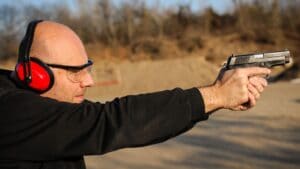
Most Texas LTC qualifications start from a ready / low-ready position. That means the handgun is pointed safely downrange, and you raise it to the target on command. No holster draw is required for the standard qualification.
Step 4: Shoot the Stages (3, 7, and 15 Yards)
- You’ll shoot the required strings at each distance.
- Take your time where allowed—accuracy matters.
- If you have a malfunction, keep the muzzle downrange and follow the instructor’s guidance.
Step 5: Scoring and Results
- The instructor will score your target and confirm whether you met the minimum passing score.
- If you don’t pass, ask what happened—most issues are fixable with a little coaching and practice.
Pro Tip: Reduce Stress Before You Arrive
- Use a firearm you’ve already tested (no surprises).
- Bring extra ammo and at least one spare magazine.
- Get a good night’s sleep and show up early.
Start here: Texas online LTC course
Gear Checklist for the Texas LTC Course of Fire (What to Bring)
The fastest way to make the Texas LTC shooting qualification stressful is showing up under-prepared. Bring reliable gear, extra ammo, and the basics so you can focus on safe handling and accurate hits.
Bring This (Recommended)
- Handgun: a reliable revolver or semi-auto you’ve already tested
- Ammo: bring extra (don’t show up with exactly 50 rounds)
- Magazines: at least 2 (or speed loaders for revolvers)
- Eye protection and ear protection
- Closed-toe shoes and range-appropriate clothing
- Government-issued ID (plus any paperwork your instructor requests)
Handgun Tips (Keep It Simple)
- Use what you can control: a handgun you can grip firmly and shoot accurately at 15 yards.
- Reliability matters more than caliber debates: a gun that runs is the best choice.
- Know your sights: confirm they’re tight/zeroed and you can see them clearly.
Ammo Tips (Avoid Problems)
- Bring quality factory ammo if possible.
- Avoid “mystery reloads” or ammo that has caused malfunctions before.
- Bring extra: if you have a malfunction, you don’t want to be short on rounds.
What Not to Bring (Common Mistakes)
- A brand-new handgun you’ve never fired
- Unfamiliar holster rigs (the test starts from low-ready; holster draw isn’t required)
- Loose ammo with no way to manage it on the line
- Gear you can’t operate confidently under basic stress
Safety foundation: basic handgun safety rules
FAQ: Texas LTC Course of Fire and Weapons Qualification
These are the most common questions people ask before the Texas LTC shooting qualification.
Do I have to draw from a holster for the Texas LTC shooting test?
Typically, no. Most LTC qualifications begin from a “ready” / low-ready position. Your instructor will explain the exact start position and commands used on that range.
What target is used for the Texas LTC course of fire?
The qualification is commonly shot on a B-27 silhouette target. It’s a standard human-silhouette target (about 45" x 24") with scoring zones.
How many rounds do you shoot for the Texas LTC range qualification?
Commonly, it’s 50 rounds total across three distances: 3 yards (20 rounds), 7 yards (20 rounds), and 15 yards (10 rounds).
What score do you need to pass the Texas LTC shooting qualification?
A common minimum passing score is 175 out of 250 points (70%). Your instructor will score the target and confirm your results.
Can I qualify with a revolver?
In most cases, yes. Many instructors allow qualification with a revolver or semi-automatic handgun. Bring what you can handle safely and shoot accurately—especially at 15 yards.
How long does the LTC shooting qualification take?
Plan for about 1–2 hours for the shooting proficiency demonstration, depending on class size, range flow, and how the instructor runs the line.
What should I bring to the range qualification?
Bring a reliable handgun, extra ammo, at least one spare magazine (or speed loaders), eye/ear protection, closed-toe shoes, and your government-issued ID. Your instructor may request additional paperwork.
What if I don’t pass the first time?
Ask your instructor what caused the point loss (usually grip, trigger control, or rushing). Most issues are fixable with a short practice session and coaching. Policies vary by instructor/range, so confirm retest options directly with them.
Are there exemptions for military or certain professions?
Some applicants may qualify for a proficiency demonstration waiver under certain conditions. If you think you qualify, confirm directly with your instructor and review the latest Texas DPS guidance.
Official hub: Texas DPS Handgun Licensing
Ready to Finish Your Texas LTC?
The Texas LTC course of fire is a straightforward proficiency check. If you show up with safe handling, a reliable handgun, and solid fundamentals at 3, 7, and 15 yards, you’ll be prepared for the weapons qualification.
Fastest Path (Online + Range Qualification)
- Complete the classroom portion online
- Schedule your in-person shooting qualification with a certified instructor
- Submit your application steps and finish strong
Related guides: basic handgun safety rules • car with firearms in Texas • best guns for concealed carry
Disclaimer: Educational information only — not legal advice. Laws and interpretations can change. If you’re involved in an incident or have a specific legal question, consult a qualified Texas attorney.