Best Guns for Concealed Carry (2026): Top 10 Picks for Every Situation
Choosing the right concealed carry gun is deeply personal—it depends on your hand size, shooting proficiency, budget, and carry method. This guide compares 10 of the best concealed carry handguns, from beginner-friendly options to advanced picks, with pros/cons and "best for" recommendations to help you find your perfect CCW.
Related: best gun for home defense • best first gun • marksmanship for self-defense
Quick Answer: The "Best" Concealed Carry Gun is the One You'll Actually Carry and Shoot Well
The best guns for concealed carry balance reliability, concealability, shootability, and capacity. Most people do best with a modern 9mm compact or micro-compact that fits their hands, runs reliably with their chosen ammo, and is comfortable enough to carry daily. If you're new, prioritize a gun you can control and train with consistently—then build skill and confidence over time.
In other words, the best guns for concealed carry are the ones you can carry daily, control under recoil, and run reliably with your defensive ammo. No matter which model you choose, training and practice matter more than the gun itself.
Key Takeaways (Read This Before You Buy)
- Reliability first: Your CCW must run every time—test it with your carry ammo
- Fit matters: Grip size and trigger reach affect accuracy and recoil control
- Carry method drives size: Appendix/IWB vs pocket carry changes what works best
- 9mm is the modern standard: Great balance of recoil, capacity, and performance
- Train for real use: Draw, reload, malfunction clearing, and shot placement
How to Choose the Best Concealed Carry Gun for You
Before you look at specific models, understand the factors that make a gun right (or wrong) for your situation. When shopping for the best guns for concealed carry, what works for your friend might be terrible for you. Here's how to narrow it down.
1. Caliber: 9mm is the Modern Standard
For most people, 9mm is the best choice for concealed carry. Here's why:
- Modern 9mm ammo is proven: Quality defensive rounds perform as well as larger calibers
- More capacity: 9mm guns typically hold 2–4 more rounds than .40 or .45
- Less recoil: Easier to control, faster follow-up shots, better for beginners
- Cheaper to practice with: 9mm ammo is the most affordable
- More gun choices: Every manufacturer makes excellent 9mm CCW options
Other calibers: .380 ACP (lighter recoil, smaller guns), .40 S&W (more power, more recoil), .45 ACP (powerful, larger, heavier). For most people, 9mm is the sweet spot.
2. Size & Concealability: Match Your Carry Method
How you plan to carry determines what size works:
Appendix/IWB (Inside Waistband)
Best for: Most people. Carry gun inside your waistband at 2–4 o'clock (right-handed) or 8–10 o'clock (left-handed). Compact or full-size works.
Pocket Carry
Best for: Backup gun or deep concealment. Requires micro-compact (.380 or small 9mm). Needs a pocket holster.
Shoulder/Ankle Holster
Best for: Specific situations (business attire, vehicle). Full-size or compact works. Less common for primary carry.
3. Grip Size & Hand Fit
If the gun doesn't fit your hands, you won't shoot it well. Consider:
- Small hands: Micro-compact or single-stack compact (Glock 43, P365, Shield)
- Medium hands: Most compact 9mms work (Glock 19, P365 XL, XD-S Mod 2)
- Large hands: Full-size or larger compacts (Glock 19, P365 XL, 1911 compact)
Pro tip: Visit a gun shop and hold different models. Your grip should be high and tight, with your trigger finger naturally on the trigger guard.
4. Capacity: Balance Concealability with Firepower
More rounds = more firepower, but larger gun = harder to conceal. Common capacities:
- 6–8 rounds: Micro-compacts (Glock 43, P365). Easiest to conceal, smallest guns
- 10–12 rounds: Compact 9mms (Glock 19, P365 XL, XD-S Mod 2). Best balance
- 15+ rounds: Full-size or larger compacts. Harder to conceal, more firepower
Reality: Most defensive encounters happen at close range with few shots fired. A reliable 8-round gun beats an unreliable 15-round gun. Capacity matters less than reliability and shot placement.
5. Reliability & Quality
Your CCW must work every time. Stick with proven brands:
- Top tier: Glock, Sig Sauer, Smith & Wesson, Springfield Armory, Ruger
- Solid budget: Taurus, Canik, Kimber
- Test your gun: Fire 200+ rounds of your carry ammo through it before carrying
6. Trigger Quality
A good trigger makes a huge difference in accuracy and control:
- Smooth, crisp trigger: Easier to shoot accurately (Sig Sauer, Smith & Wesson)
- Heavy or gritty trigger: Harder to shoot well (some budget options)
- Safe trigger: Should have a safety mechanism (trigger safety, manual safety, or both)
7. Sights & Optics
Can you see your sights clearly? Do you want to add a red dot?
- Iron sights: Standard on most guns. Upgrade to night sights if possible
- Red dot ready: Some guns come pre-cut for red dot sights (P365 XL, XD-S Mod 2)
- Optic-ready: More expensive, but faster target acquisition in low light
8. Budget: How Much Should You Spend?
- Budget ($300–$450): Taurus G2C, Canik TP9SF. Good value, proven reliability
- Mid-range ($450–$650): Glock 43, Smith & Wesson Shield EZ, Springfield XD-S. Best balance
- Premium ($650+): Sig Sauer P365 XL, high-end 1911, Glock 19. Advanced features, optic-ready
Don't cheap out on reliability, but don't overspend either. A $400 gun you train with beats a $1,200 gun in a safe.
9. Training & Practice
The gun is only part of the equation. You also need:
- Holster: Quality, retention holster ($50–$150). Appendix or IWB recommended
- Ammo: Quality defensive ammo for carry, cheap practice ammo for training
- Training: Take a Texas LTC course and practice regularly
- Skills: Draw, reload, malfunction clearing, shot placement under stress
The Golden Rule
The best concealed carry gun is the one you'll actually carry and shoot well. Don't buy a gun that's too small to control, too large to carry, or too expensive to practice with. Pick something reliable, train consistently, and build skill over time.
The 10 Best Guns for Concealed Carry (2026)
Below are the best guns for concealed carry in 2026—10 proven handguns organized by use case. Each includes pros, cons, and who it's best for. All are reliable, concealable, and available in standard calibers.
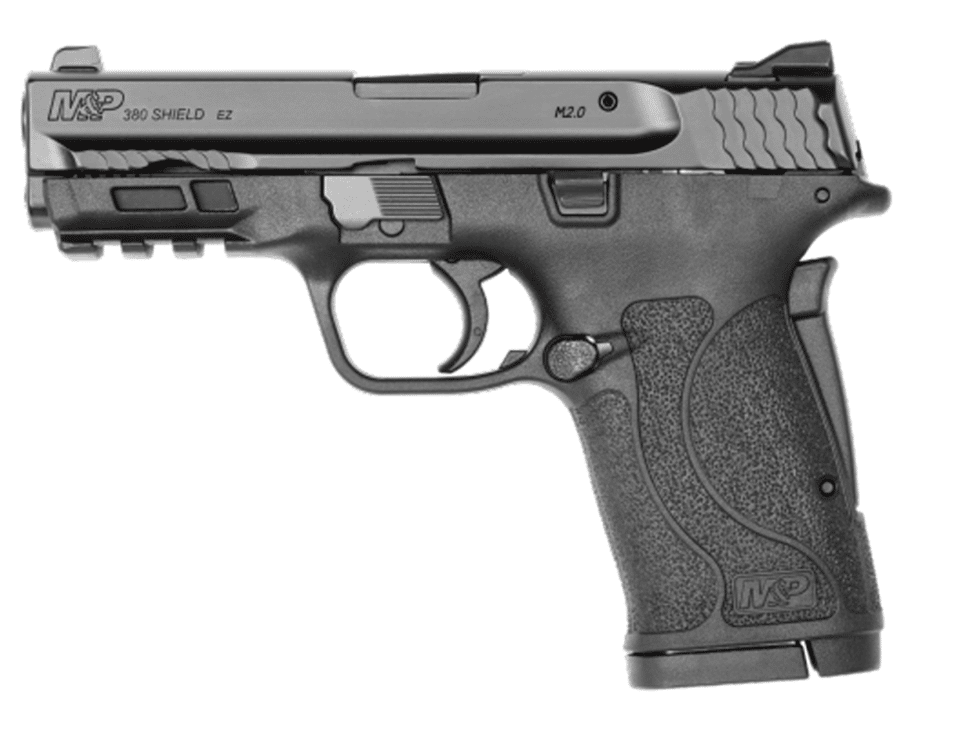
1. Smith & Wesson M&P Shield EZ
Best for: Beginners, first-time CCW, people with weak hands or arthritis
Caliber: 9mm or .380 ACP | Capacity: 8 rounds (9mm) | Price: $400–$450
Pros:
- Easiest slide to rack—designed for weak hands
- Light, crisp trigger (best-in-class for this price)
- Perfect size for appendix carry
- Excellent reliability and accuracy
- Great for people with arthritis or hand strength issues
Cons:
- Only 8-round capacity (smaller than competitors)
- Stock sights are mediocre (upgrade recommended)
- No optic-ready option
Verdict: If you're new to concealed carry or have hand strength concerns, this is your gun. The trigger alone makes it worth it.
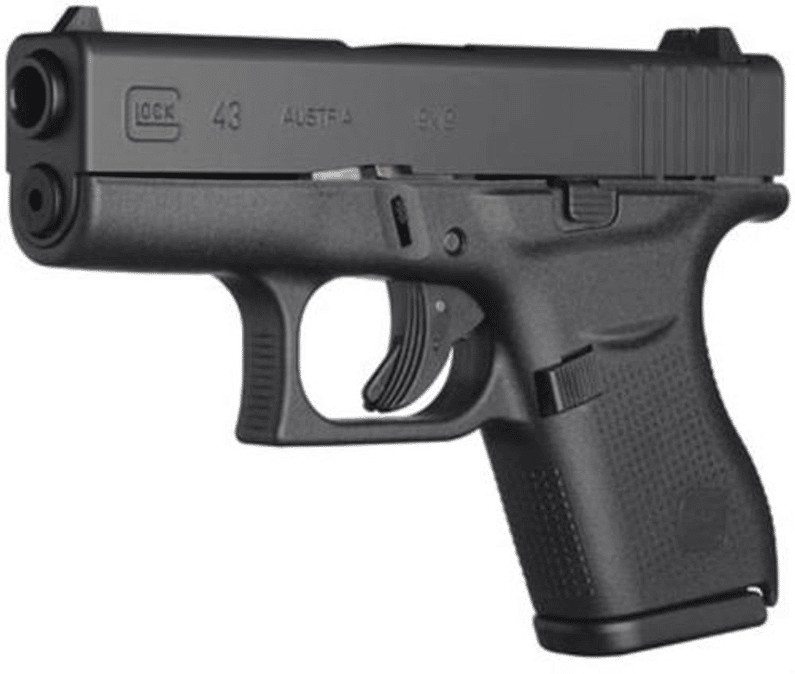
2. Glock 43
Best for: Reliability-focused carriers, people who want simplicity, all hand sizes
Caliber: 9mm | Capacity: 6 rounds | Price: $450–$500
Pros:
- Legendary Glock reliability—proven over decades
- Beavertail grip design fits all hand sizes
- Simple, no-frills design—nothing to break
- Excellent trigger for a Glock
- Huge aftermarket support (holsters, sights, parts)
Cons:
- Only 6-round capacity (smallest on this list)
- Glock trigger is heavier than some competitors
- No optic-ready option
- Stock sights are basic
Verdict: You can't go wrong with Glock reliability. If you want a gun that will work for 20+ years with minimal maintenance, this is it.
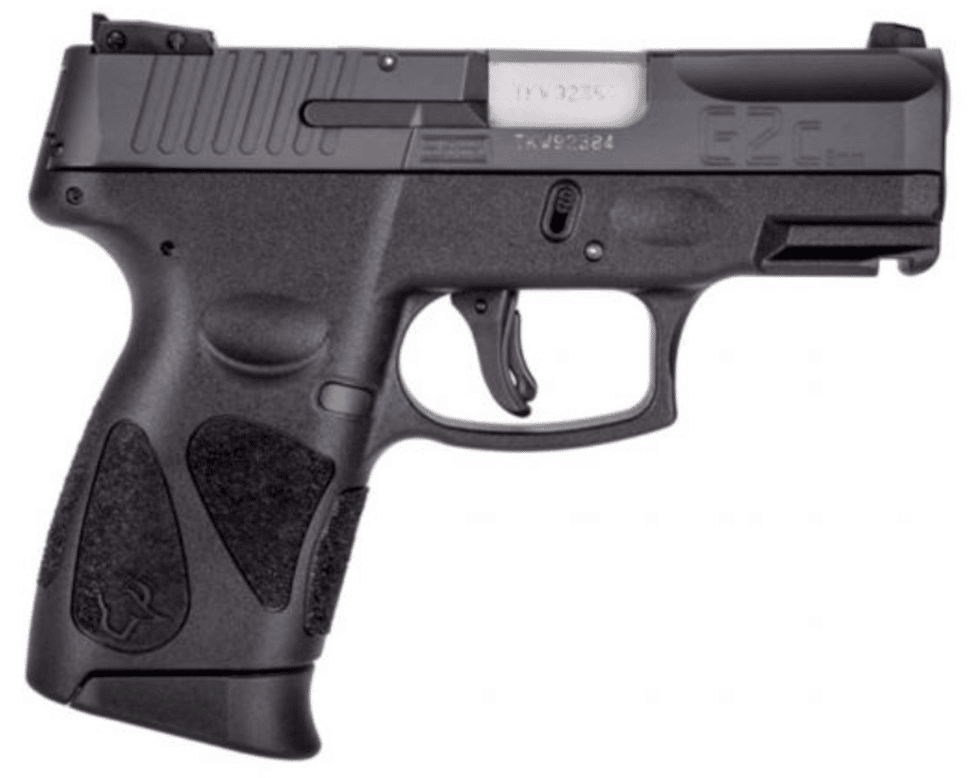
3. Taurus G2C
Best for: Budget buyers, people on a tight budget, backup gun
Caliber: 9mm | Capacity: 12 rounds | Price: $250–$350
Pros:
- Cheapest reliable option on this list
- 12-round capacity (best for the price)
- Good ergonomics and grip texture
- Adjustable rear sight (unusual for this price)
- Proven reliability with proper maintenance
Cons:
- Trigger is rough and heavy (requires practice)
- Not as refined as premium brands
- Aftermarket support is limited
- Slightly larger than micro-compacts
Verdict: If budget is your main concern and you're willing to practice with a heavier trigger, this is an excellent value. Don't let the price fool you—it's reliable.
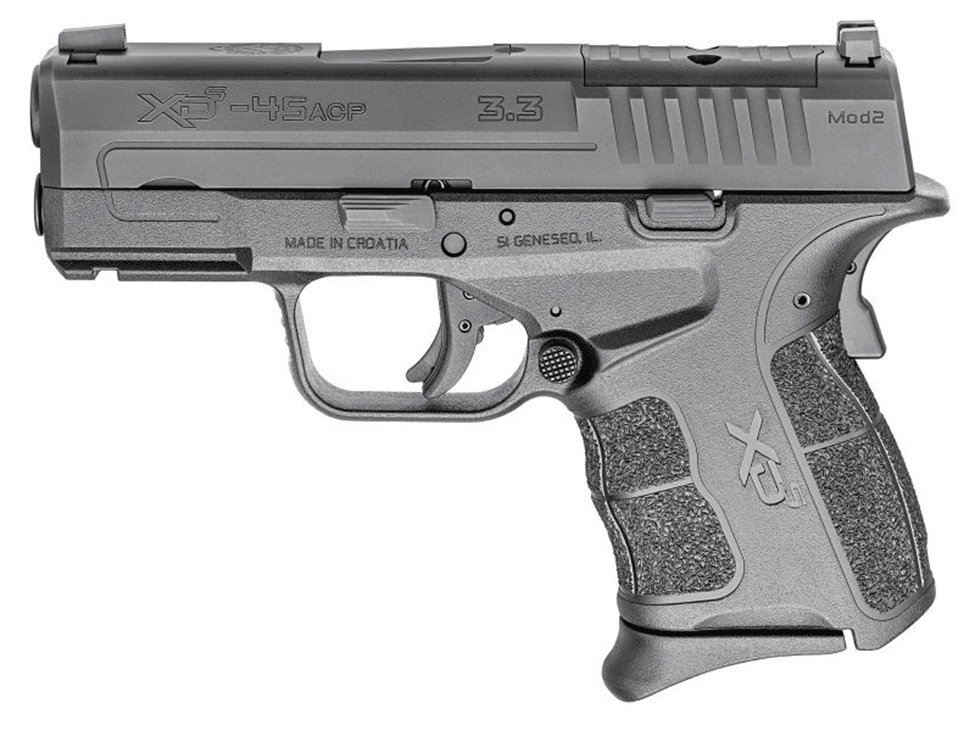
4. Springfield Armory XD-S Mod 2
Best for: Women, people wanting optic-ready, those with smaller hands
Caliber: 9mm or .45 ACP | Capacity: 7–9 rounds | Price: $500–$550
Pros:
- Excellent for smaller hands and women
- Optic-ready option available (red dot compatible)
- Improved grip over previous XD-S model
- Good ergonomics and trigger
- Reliable and accurate
Cons:
- Single-stack design limits capacity (7–9 rounds)
- Slightly thicker than some micro-compacts
- Optic-ready version costs more
Verdict: If you have smaller hands or want an optic-ready gun without breaking the bank, this is a solid choice. Great balance of size and shootability.
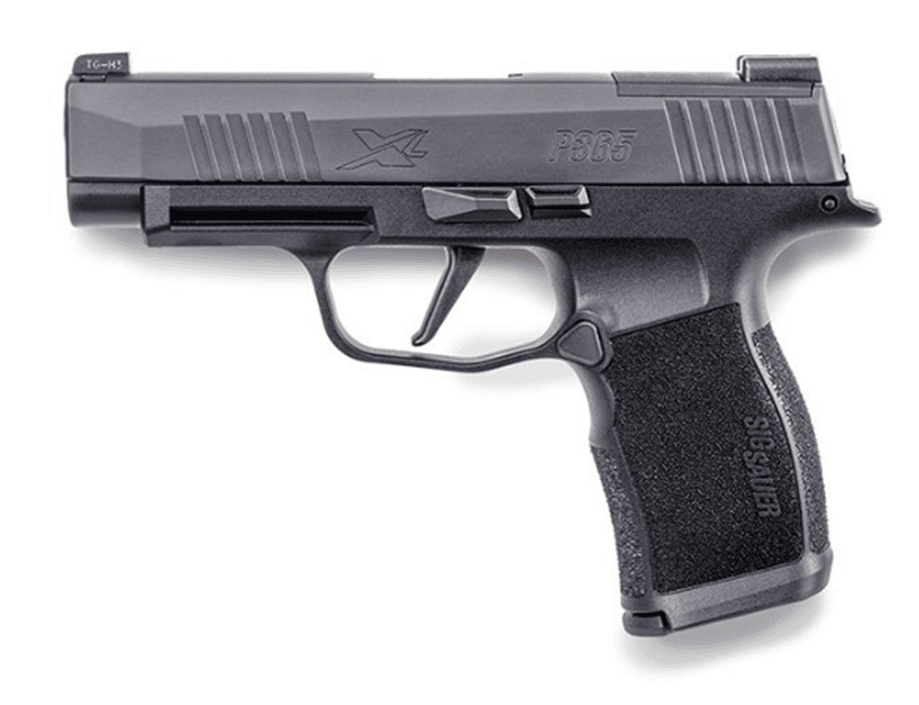
5. Sig Sauer P365 XL
Best for: People wanting 12-round capacity, optic-ready, advanced shooters
Caliber: 9mm | Capacity: 12 rounds (plus 1 in chamber) | Price: $650–$750
Pros:
- 12-round capacity in a compact frame (best-in-class)
- Optic-ready (red dot compatible)
- Excellent flat-profile trigger (crisp and clean)
- Great accuracy and shootability
- Reliable and proven in the field
Cons:
- Most expensive on this list
- Slightly larger than micro-compacts (harder to conceal)
- Iron sights must be removed for red dot (no co-witness option)
Verdict: If you want the best balance of capacity, shootability, and features, and you have the budget, this is the gun. It's a favorite among serious CCW carriers.
6. Ruger Security-9 Compact
Best for: Mid-range budget, reliability, good trigger
Caliber: 9mm | Capacity: 10 rounds | Price: $500–$550
Pros:
- Excellent trigger for the price (smooth and crisp)
- 10-round capacity (good balance)
- Reliable Ruger quality
- Good ergonomics and grip
- Affordable mid-range option
Cons:
- Not optic-ready (standard version)
- Slightly larger than micro-compacts
- Less aftermarket support than Glock
Verdict: Ruger's underrated gem. If you want a reliable, accurate gun with a great trigger and don't need optic-ready, this is excellent value.
7. Glock 19
Best for: All-around reliability, larger hands, people who want more capacity
Caliber: 9mm | Capacity: 15 rounds | Price: $500–$550
Pros:
- 15-round capacity (most versatile on this list)
- Legendary Glock reliability
- Great for larger hands
- Huge aftermarket support
- Works for CCW, home defense, and training
Cons:
- Larger than micro-compacts (harder to conceal)
- Needs a quality holster and belt to carry comfortably
- Glock trigger feel isn't for everyone
Verdict: If you want one handgun that can do almost everything well, the Glock 19 is hard to beat.
8. Smith & Wesson M&P9 Shield Plus
Best for: People wanting more capacity in a compact, great trigger
Caliber: 9mm | Capacity: 10–13 rounds | Price: $550–$600
Pros:
- Excellent capacity for a slim carry gun
- Great trigger (S&W does this well)
- Reliable and accurate
- Easy to conceal while still shootable
- Optic-ready variants available (depending on model)
Cons:
- More recoil than larger compacts (typical of slim guns)
- Optic-ready versions cost more
Verdict: A strong "do-it-all" slim 9mm if you want more rounds without jumping to a bigger gun.
9. Kimber Micro 9
Best for: 1911 fans, people wanting a premium micro-compact
Caliber: 9mm | Capacity: 6–8 rounds | Price: $600–$700
Pros:
- 1911-style ergonomics and trigger feel
- Very easy to conceal
- Premium fit and finish
- Accurate for its size
Cons:
- Lower capacity than modern micro-compacts
- Manual safety requires training and consistency
- More expensive than polymer options
Verdict: If you love the 1911 style and want a small, classy carry gun, the Micro 9 is a solid pick—just train with that safety.
10. Canik TP9SF
Best for: Budget buyers wanting more features, value-seekers
Caliber: 9mm | Capacity: 18 rounds | Price: $300–$400
Pros:
- Excellent trigger for the price
- High capacity (18 rounds)
- Reliable and accurate
- Strong value for money
Cons:
- Larger frame (harder to conceal)
- Better as a "do-it-all" gun than deep concealment
- Less aftermarket support than Glock
Verdict: If you want maximum value and capacity, and don't mind a larger gun, this is unbeatable value. Better for home defense, but works for CCW if you have a good holster.
Best Guns for Concealed Carry: Quick Comparison Table
| Gun | Caliber | Capacity | Price | Best For |
|---|---|---|---|---|
| S&W Shield EZ | 9mm/.380 | 8 | $400–$450 | Beginners, weak hands |
| Glock 43 | 9mm | 6 | $450–$500 | Reliability, simplicity |
| Taurus G2C | 9mm | 12 | $250–$350 | Budget buyers |
| Springfield XD-S Mod 2 | 9mm/.45 | 7–9 | $500–$550 | Women, small hands |
| Sig P365 XL | 9mm | 12 | $650–$750 | Capacity + features |
| Ruger Security-9 Compact | 9mm | 10 | $500–$550 | Mid-range value |
| Glock 19 | 9mm | 15 | $500–$550 | Capacity, versatility |
| S&W Shield Plus | 9mm | 13 | $550–$600 | Capacity + optic-ready |
| Kimber Micro 9 | 9mm | 6–8 | $600–$700 | 1911 fans, premium |
| Canik TP9SF | 9mm | 18 | $300–$400 | Budget, capacity |
Holsters, Gear & Training: The Other Half of Concealed Carry
Choosing the right gun is only half the battle. You also need a quality holster, carry method, and training. Here's what you need to know.
Holster Types: Which One is Right for You?
Your holster is as important as your gun. A bad holster makes carrying uncomfortable and unsafe. Here are the main types:
Appendix/IWB (Inside Waistband)
Best for: Most people. Gun sits inside your waistband at 2–4 o'clock (right-handed) or 8–10 o'clock (left-handed). Fast draw, easy concealment.
Price: $50–$150
Brands: Vedder Holsters, Alien Gear, StealthGearUSA, Crossbreed
Pocket Carry
Best for: Backup gun or deep concealment. Requires a pocket holster to prevent printing and ensure safe draw.
Price: $30–$80
Brands: Desantis Nemesis, DeSantis Pocket Tuck, Galco
Shoulder/Ankle Holster
Best for: Specific situations (business attire, vehicle). Less common for primary carry. Requires practice for safe draw.
Price: $60–$150
Brands: Galco, Bianchi, Blackhawk
What Makes a Good Holster?
- Retention: Gun stays secure during movement, but draws smoothly
- Comfort: Wearable for 8+ hours without pain or printing
- Concealment: Hides the gun's outline under normal clothing
- Safety: Covers the trigger guard to prevent accidental discharge
- Draw speed: Allows fast, smooth draw under stress
Pro tip: Don't cheap out on a holster. A $100 holster is cheaper than a negligent discharge lawsuit. Invest in quality.
Carry Method: How Will You Carry?
Your carry method affects gun choice and holster choice:
Appendix Carry (AIWB)
Gun at 2–4 o'clock (right-handed). Fastest draw, most comfortable for most people. Requires good holster and trigger guard coverage.
3 o'Clock Carry (IWB)
Gun at 3 o'clock (right side). Classic position. Good for larger guns and people with bigger frames.
4–5 o'Clock Carry (IWB)
Gun at 4–5 o'clock (right side). Good for appendix-uncomfortable people. Slightly slower draw than appendix.
Pocket Carry
Gun in front pocket with pocket holster. Deep concealment, but slower draw and limited to micro-compacts.
Essential Gear Beyond the Gun
To carry safely and effectively, you need:
- Quality holster: $50–$150 (non-negotiable)
- Carry ammo: Quality defensive rounds ($1–$2 per round). Test in your gun first
- Practice ammo: Cheap range ammo for training ($0.20–$0.50 per round)
- Belt: Sturdy gun belt ($50–$100). Regular belts won't support the weight
- Spare magazine: At least one extra mag ($15–$30)
- Magazine pouch: $20–$50
- Flashlight: For low-light situations ($30–$100)
- First aid kit: For yourself or others ($30–$100)
Training: The Most Important Part
A gun is only as good as your ability to use it. You need training in:
1. Texas LTC Course (Required)
Take a Texas LTC course to understand Texas gun laws, use of force, and legal responsibilities. This is required for your license and essential knowledge.
2. Marksmanship & Fundamentals
- Proper grip and stance
- Sight alignment and trigger control
- Dry fire practice (safely, with an unloaded gun)
- Live fire training at a range
- Target practice at 7, 15, and 25 yards
3. Defensive Skills
- Draw from concealment (practice safely)
- Reload under stress
- Malfunction clearing (tap, rack, bang)
- Low-light shooting
- Shooting from cover
4. Legal & Situational Awareness
- Texas use of force laws
- When you can legally use force
- Situational awareness (avoiding threats)
- De-escalation techniques
- What to do after a defensive incident
Training Recommendations
- Minimum: 200 rounds through your carry gun before carrying it
- Regular practice: 50–100 rounds per month to maintain proficiency
- Formal training: At least one professional instructor course per year
- Dry fire: 10–15 minutes of safe dry fire practice 3–4 times per week
The Golden Rule of Concealed Carry
Your gun is only as good as your training and judgment. A $1,000 gun in untrained hands is less effective than a $400 gun in trained hands. Invest in training, practice regularly, and always follow the four rules of gun safety.
Ready to Carry? Get Your Texas LTC
Choosing the right gun is important, but you also need to understand Texas gun laws and your legal responsibilities. Our Texas LTC course covers:
- Texas gun laws and where you can carry
- Use of force and self-defense laws
- Handgun safety and proficiency
- What to do after a defensive incident
- Reciprocity with 30+ states
$40 online course — self-paced, ~4 hours, unlimited exam attempts. Live-fire test required with certified instructor.
Supporting Youth Shooting Sports
Every LTC course enrollment supports Red Dirt Shooting Sports, a nonprofit empowering youth (ages 8–18) through shooting sports, safety, and outdoor education. When you take our course, you're investing in the next generation of responsible gun owners.
Frequently Asked Questions About Concealed Carry Guns
What's the best concealed carry gun for beginners? +
The Smith & Wesson M&P Shield EZ is the best choice for beginners. It has an easy-to-rack slide (great for weak hands), an excellent trigger, and is perfectly sized for appendix carry. If you prefer Glock reliability, the Glock 43 is also beginner-friendly. Both are reliable, accurate, and forgiving of technique mistakes.
Can I carry a larger gun like a Glock 19 concealed? +
Yes, but it requires a good holster, proper carry method, and the right clothing. Appendix carry (AIWB) works well for larger guns if you have a quality holster and wear loose-fitting shirts. Many people successfully carry full-size guns concealed—it just takes practice and the right setup.
Is 9mm good enough for self-defense? +
Yes. Modern 9mm defensive ammo is proven effective. The FBI and most law enforcement agencies use 9mm. The advantages (more capacity, less recoil, cheaper practice ammo) outweigh the minor power difference compared to .40 or .45. Shot placement matters more than caliber—a well-placed 9mm is better than a poorly placed .45.
Should I get a gun with a manual safety or without? +
Most modern CCW guns have a trigger safety (like Glock) or no manual safety. Manual safeties (like 1911s) require training and muscle memory to disengage under stress. For most people, a trigger safety is safer and faster. If you choose a manual safety gun, practice regularly with it.
How much should I spend on a concealed carry gun? +
$400–$600 is the sweet spot. You can find reliable guns for $300–$400 (Taurus G2C, Canik), but mid-range options ($450–$600) offer better triggers and features. Don't overspend on a $1,200 gun if you won't practice with it. A $400 gun you train with beats a $1,200 gun in a safe.
Can I carry a .380 ACP for self-defense? +
Yes, but 9mm is better. Modern .380 ammo is effective, but 9mm offers more power and capacity in similar-sized guns. The Smith & Wesson M&P Shield EZ comes in .380 if you prefer it, but most experts recommend 9mm as the minimum for reliable self-defense.
What's the difference between a micro-compact and a compact gun? +
Micro-compact: 6–8 round capacity, easiest to conceal, slower to shoot accurately (Glock 43, P365). Compact: 10–13 round capacity, slightly larger, easier to shoot well (Glock 19, P365 XL). Choose micro-compact for deep concealment, compact for better shootability.
Do I need to carry a spare magazine? +
Yes. A spare magazine is inexpensive insurance. Most defensive encounters are short, but carrying a spare takes up minimal space and gives you a reload option if needed. It's also useful for practice and testing reliability.
What's the best holster for concealed carry? +
An appendix/IWB (inside waistband) holster from a quality brand like Vedder, Alien Gear, or StealthGear. Look for one with good retention, trigger guard coverage, and comfort for all-day wear. Expect to spend $50–$150. Test it before carrying—comfort and concealment vary by person.
How much training do I need before carrying? +
Minimum: Take a Texas LTC course (required by law) and fire 200+ rounds through your gun. Ideal: Take a professional defensive pistol course, practice monthly, and train regularly. The more you train, the safer and more effective you'll be.
Can women carry the same guns as men? +
Yes, but fit matters. Women with smaller hands may prefer the Springfield Armory XD-S Mod 2, Glock 43, or Smith & Wesson Shield EZ. Women with larger hands can carry any gun on this list. The key is finding a gun that fits your hand and that you can control and practice with consistently.
Should I get an optic-ready gun? +
Optic-ready guns (like the P365 XL or XD-S Mod 2) are great if you want a red dot sight. Red dots improve accuracy and speed in low light. However, they add cost and require training. For beginners, iron sights are fine. Consider optic-ready if you plan to upgrade later.
What's the best gun for Texas concealed carry? +
Any reliable 9mm on this list works in Texas. Popular choices: Glock 43 (reliability), Sig P365 XL (capacity + features), Smith & Wesson Shield EZ (beginners). Texas law allows concealed carry with a valid LTC in most places. Get your LTC and choose a gun that fits your hands and carry method.
Take the Next Step: Get Your Texas LTC Today
You've chosen your gun. Now understand Texas law and your legal responsibilities. Our online LTC course covers gun laws, use of force, safety, and more—all in 4 hours, at your own pace.
- ✓ Texas gun laws and where you can carry
- ✓ Use of force and self-defense laws
- ✓ Handgun safety and proficiency
- ✓ What to do after a defensive incident
- ✓ Reciprocity with 30+ states
Red Dirt Shooting Sports
Every LTC enrollment supports youth shooting sports education. We're empowering the next generation of responsible gun owners.
Important Disclaimer
Educational information only — not legal advice. This guide is for informational purposes and should not be considered legal advice. Gun laws, regulations, and interpretations change frequently and vary by location. The information provided here is accurate as of the publication date but may become outdated.
If you're involved in a defensive incident or have specific legal questions about your situation, consult a qualified Texas attorney immediately. Self-defense laws are complex and fact-dependent. What's legal in one situation may not be in another.
Always prioritize safety: Follow the four rules of gun safety, train regularly, and carry responsibly. Your gun is a serious responsibility—treat it accordingly.
Ready to Carry? Get Your Texas LTC
$40 online course • Self-paced • 4 hours